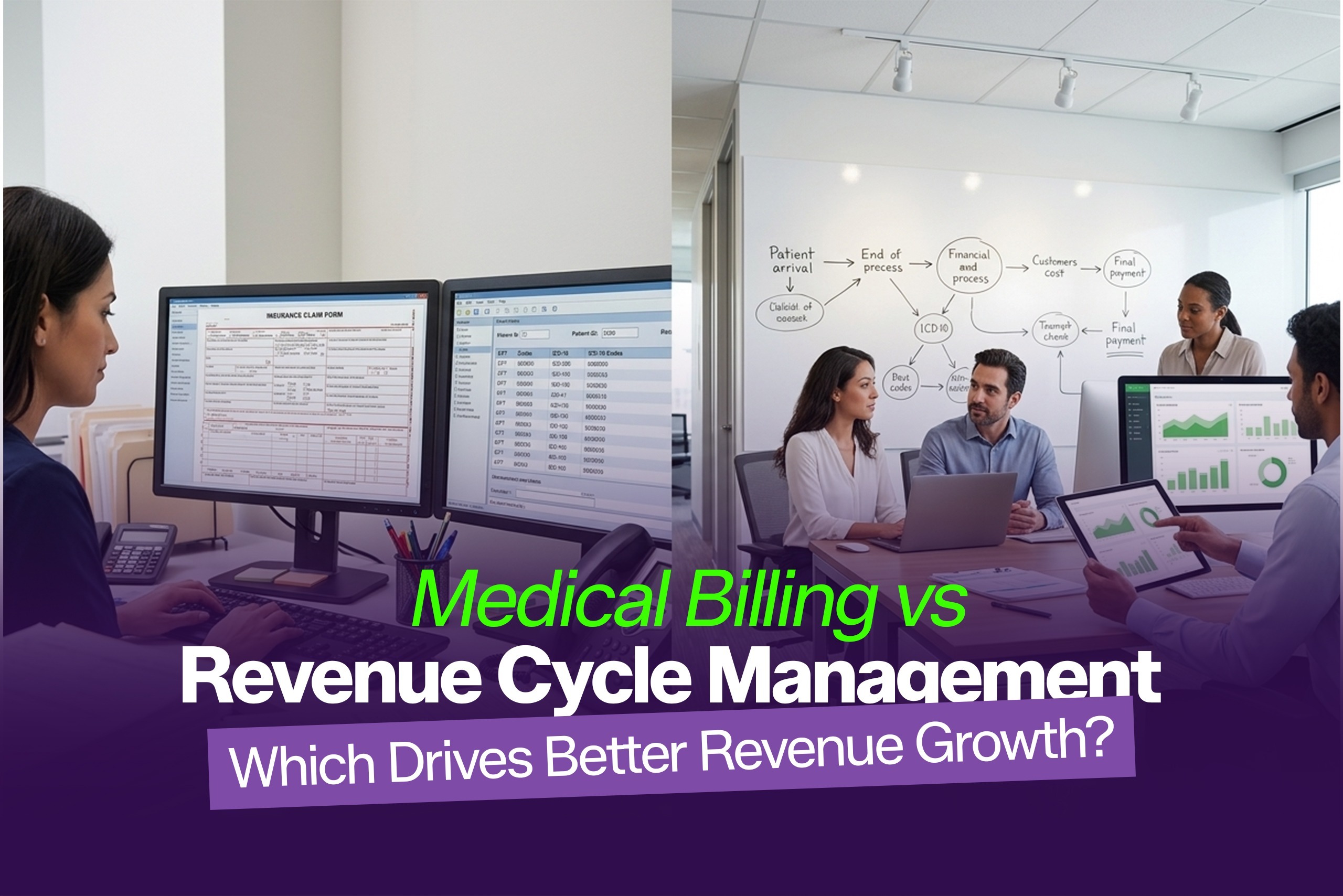

Spend enough time in this industry and you stop being surprised when a well-run DME company starts bleeding money. The equipment is delivered on time, the patients are satisfied, the staff is doing their jobs — yet the bank account tells a different story. Nine times out of ten, the problem lives in DME medical billing. Billing is where earned revenue either gets collected or quietly disappears, and every stage of the revenue cycle either benefits from good billing or suffers from poor billing. There is no middle ground here.
Understanding DME Medical Billing
Durable medical equipment billing applies to products that meet a specific set of criteria — the item has to withstand repeated use, serve a genuine medical function, be suitable for home use, and be something a healthy person simply would not require. Wheelchairs, CPAP devices, oxygen concentrators, walkers, home hospital beds, orthotic braces, infusion pumps, and blood glucose monitors all fall within this category. What separates DME billing from general medical billing is that each product type carries its own HCPCS codes, documentation standards, and payer rules that billers need to know cold before they touch a claim.
Overview of the billing workflow for DME
The billing process for durable medical equipment billing does not start at delivery — it starts the day the physician order comes through. Insurance coverage gets verified, prior authorization requirements are identified, and medical necessity documentation is assembled before anything ships. That pre-delivery groundwork is where the claim outcome is largely determined. DME billing services that treat this stage carefully see far fewer denials downstream. Those that rush through it spend months cleaning up problems that should never have started.
Role of DME Billing in Revenue Cycle Management
From patient intake to final payment
DME revenue cycle management is not a single task — it is a chain of financial events that runs from patient registration all the way through final payment collection. The insurance verification process at intake tells you what the payer will actually cover before anything is committed. Charge capture comes next, where HCPCS codes and ICD-10 diagnosis codes are matched to the physician order. At adjudication, payers review every detail of that claim, and one mismatch sends it back. When you look at where revenue cycle breakdowns actually happen in DME, they almost always trace back to a specific step where someone cut a corner.
Why clean claims are the foundation
Medical billing for DME providers runs on clean claim rates. A clean claim goes out with the right codes, complete documentation, confirmed authorization, and zero missing fields. Payers process those without hesitation. A claim with errors comes back rejected, sits in a correction queue, gets resubmitted, and by the time payment arrives, two or three months have passed. When you multiply that delay across a billing operation handling hundreds of claims monthly, the cash flow difference between a 95% clean claim rate and a 70% clean claim rate is not small — it is the difference between a financially stable business and one that constantly feels short.
Key Challenges in DME Medical Billing
Insurance verification issues
Coverage assumptions are one of the most expensive habits a DME supplier can have. Active insurance does not mean the ordered item is covered. Plans have exclusions, quantity caps, and referral requirements that vary across payers and even across plan types within the same payer. The insurance verification process has to confirm specific coverage for the specific item before the delivery truck leaves. Suppliers who skip this step routinely end up delivering equipment that nobody will pay for, and collecting from patients who were never told they had out-of-pocket responsibility is a recovery effort that rarely goes well.
Complex documentation requirements
Every category of DME carries a documentation requirement that goes beyond a basic physician order. Depending on the item, you may need a detailed written order, a certificate of medical necessity, face-to-face encounter notes, recent clinical records supporting the diagnosis, and a signed delivery confirmation. Power wheelchairs and respiratory equipment sit at the heavier end of those requirements. Payers do not call to ask for missing paperwork. They deny the claim and the denial reason often does not even spell out exactly what was missing, leaving the billing team to investigate on their own.
Frequent claim denials and rejections
People who come to DME claims processing from other billing specialties are usually caught off guard by how often claims come back. The denial rate is genuinely higher here than almost anywhere else in healthcare billing. Wrong codes, lapsed authorizations, plan exclusions, late submissions — each generates a denial that requires staff time to investigate, correct, and resubmit. Without a structured DME denial management process, those claims pile up in accounts receivable until someone makes a write-off decision. At that point, money that was fully collectable simply disappears from the books.
DME prior authorization billing delays
Authorization requirements vary widely across payers, but for many high-cost DME items they are non-negotiable. The approval process can stretch one to two weeks with certain payers, and delivering equipment before that approval is confirmed puts the entire claim at risk. DME prior authorization billing needs dedicated tracking — someone assigned to initiate every request, follow up within defined timeframes, and confirm approval before anything ships. Teams managing this through shared email inboxes and sticky notes eventually miss something, and the cost of that missed authorization shows up weeks later when the denial arrives.
Coding errors and HCPCS mismatches
DME coding and billing guidelines operate on HCPCS Level II codes, not the CPT codes that dominate most of medical billing. The two systems do not overlap, and a team trained primarily on CPT coding will make HCPCS errors regularly without even realizing it. Pairing an HCPCS code with the wrong ICD-10 diagnosis triggers immediate rejection. Medicare DME billing layers on additional complexity through capped rental rules, purchase conversion timelines, modifier requirements, and local coverage determinations that change periodically. A billing team working off outdated code sets quietly generates a denial pattern that grows worse with every claim cycle.
Impact on Cash Flow and Revenue
Delayed reimbursements and rising AR days
A denied claim does not pause the reimbursement clock — it resets it. A claim that should have paid within 40 days can take 100 days or longer once denial, correction, and resubmission are factored in. When that is happening across a significant share of monthly claims, accounts receivable days climb and cash that should be funding operations stays locked in unresolved claims. For DME suppliers running on thin margins with high equipment costs, that AR pressure compounds quickly and starts affecting the ability to manage the business day to day.
Revenue leakage from denials
Revenue leakage in DME billing rarely looks like a single dramatic loss. It accumulates through small decisions made under pressure — a denied claim set aside because the team is already behind, an underpayment accepted because the dispute process feels like too much work, a claim written off two weeks before the appeal deadline because nobody tracked it. Those small write-offs across hundreds of monthly claims add up to a number that most suppliers would be uncomfortable seeing if it were displayed on a single report. A large portion of those denials were recoverable with proper follow-through.
The real cost of billing inaccuracy
Billing errors carry consequences that go beyond delayed payments. Patterns of overcoding attract payer audits and sometimes draw attention from program integrity units. Undercoding consistently leaves earned revenue on the table. Billing for equipment that was not delivered is fraud, even if the intent was purely administrative error. Recoupment demands — where payers claw back previously paid claims — hit cash flow hard and often arrive months after the original billing period. Cash flow optimization in DME cannot be divorced from billing accuracy because they are fundamentally the same problem.
DME Billing Compliance and Regulations
Medicare DMEPOS guidelines
Medicare DME billing sits inside a compliance framework called DMEPOS that covers supplier enrollment, accreditation requirements, documentation standards, replacement frequency rules, and local coverage determinations. Staying current with these requirements is an active responsibility, not a one-time orientation. Rules change, local coverage policies update, and suppliers who are not tracking those changes end up submitting claims under outdated assumptions. Losing Medicare billing privileges is among the more serious outcomes in this business — for most DME suppliers it is not something the operation survives.
HIPAA compliance in the billing process
Patient information runs through every step of the DME billing workflow — insurance records, clinical documentation, diagnosis codes, payment histories. All of it is protected health information under HIPAA, and the obligations that come with that do not allow for gaps. Staff training has to be current, software platforms have to meet security requirements, and data handling procedures have to be reviewed regularly. Compliance and HIPAA regulations in DME billing are not a checkbox exercise. A breach brings financial penalties, but the harder damage is to patient trust, which in a local market is genuinely difficult to rebuild.
Documentation audits and fraud prevention
DME claims draw more payer audit attention than most billing categories. Auditors check whether the documentation on file actually supports the billed service, whether delivery was confirmed, and whether the codes used match what was provided. Suppliers who cannot produce complete records quickly when an audit request arrives face recoupment on claims already paid. The documentation practices that protect against audits are the same ones that prevent denials — building them into daily workflow rather than scrambling to reconstruct records after the fact is the only approach that holds up consistently.
How Efficient DME Billing Improves RCM
Faster approvals and lower denial rates
The financial gap between DME billing services running at a high first-pass acceptance rate versus a low one is significant enough to be visible on a monthly P&L. Healthcare revenue cycle optimization in DME starts with measuring that number and treating it seriously. Higher first-pass rates compress payment timelines, reduce the administrative overhead of rework, and free billing staff to work on activities that actually require judgment rather than correcting the same recurring errors. Suppliers who track this metric and work on it consistently outperform those who only review it when there is a problem.
Better patient satisfaction
Most DME suppliers think about patient satisfaction in terms of delivery experience and equipment quality. Billing plays a bigger role than people give it credit for. A patient who receives a surprise bill for an amount they were never told about, or whose equipment was delayed two weeks because an authorization sat unworked in someone’s queue, forms a lasting impression of the company from that experience. In a business built on ongoing rentals and repeat equipment needs, that impression either keeps patients returning or sends them looking for a different supplier.
Automation and billing software benefits
Technology in DME billing does not replace the need for experienced staff — it changes what those staff members spend their time doing. Automated eligibility verification catches coverage gaps before delivery rather than after. Built-in coding validation flags mismatched codes before a claim goes out. Authorization tracking dashboards make every pending request visible in real time. Denial reporting surfaces patterns early instead of burying them in month-end spreadsheets. The suppliers who invest in the right tools give their billing teams the capacity to focus on complex appeals, payer escalations, and process improvements rather than repetitive data correction.
Best Practices for Optimizing DME Medical Billing
Verify insurance before every delivery
Insurance verification belongs in the delivery workflow as a hard gate — not a step that gets skipped when things get busy. Use a real-time eligibility tool that pulls current coverage data directly from payers rather than relying on cached information. Define ownership for this step so it never falls through the cracks. Unverified deliveries are a calculated risk, and suppliers who take that risk routinely pay for it in write-offs that were entirely preventable.
Use correct coding systems consistently
DME coding and billing guidelines require specific training, not a general medical billing background. Staff handling DME accounts need working knowledge of HCPCS Level II, modifier usage, rental billing cycles, and the payer-specific variations that exist across any typical book of business. Quarterly internal coding audits catch patterns before they accumulate into material denial volume. One team member billing a code incorrectly for three months generates more damage than three individual errors — and the fix is a training correction, not just claim-by-claim cleanup.
Maintain complete and organized documentation
Build documentation checklists for every equipment category and make them mandatory, not optional. Delivery staff, intake coordinators, and billing personnel each own a piece of the documentation trail, and they each need to understand what their piece protects. A delivery confirmation that was not signed because the driver felt awkward asking becomes a billing problem weeks later that the back office team spends hours trying to resolve. The culture around documentation has to come from operational leadership, not just the billing department.
Track and manage denials actively
A denial log that records what happened but does not drive action is just an archive. Effective DME denial management means every denied claim has an owner, a deadline, and a follow-up date. Monthly trend reviews should identify denial reasons that keep recurring — those patterns point to upstream process failures that individual claim corrections will never fix. Medical billing services for DME companies that build this discipline into standard operations recover significantly more revenue than those treating denials as isolated events to clear when time permits.
Consider outsourced DME billing when needed
Keeping billing in-house feels like the conservative financial choice. The actual math often tells a different story once you factor in denial rates, AR aging, staff turnover costs, and revenue left behind when claims are not worked properly. Outsourced DME billing makes the most practical sense when a supplier lacks the payer-specific depth or staffing consistency to run tight billing operations internally. When evaluating outside partners, ask directly about their clean claim rate, how denials are tracked and appealed, and what reporting looks like month to month. Partners who cannot answer those questions specifically are not worth the contract.
Conclusion
The DME suppliers who stay financially healthy over the long run share one consistent trait — they take billing seriously as a business function, not just an administrative necessity. DME medical billing touches every stage of revenue cycle management, and the quality of that billing determines whether a supplier collects what it earns or spends its time recovering money that should never have been lost. Whether billing is handled internally or through a specialized DME billing services partner, the discipline is the same: verify early, code accurately, document completely, appeal denials consistently, and measure the numbers that actually matter. Those habits do not guarantee an easy business, but they do guarantee that the revenue side of it works.
Frequently Asked Questions
What is DME medical billing?
DME medical billing is the end-to-end process of submitting insurance claims for durable medical equipment, managing prior authorizations, handling claim denials, and collecting reimbursement from payers. It uses HCPCS Level II coding, requires detailed medical necessity documentation, and operates under compliance rules that are stricter and more equipment-specific than standard medical billing.
Why is durable medical equipment billing more complex than regular medical billing?
Documentation requirements are heavier, the HCPCS coding system is different from CPT, prior authorizations are required more frequently, and Medicare DMEPOS compliance adds a separate layer of rules that general billing staff are rarely trained on. Payers also audit DME claims more aggressively than most other billing categories, which means documentation discipline matters more here than almost anywhere else in healthcare billing.
How does DME billing affect revenue cycle management?
Billing quality shapes the financial outcome at every stage of DME revenue cycle management. A verification error at intake produces a denial at adjudication. A coding mistake at charge capture delays payment by months. When billing runs well, payment timelines shorten, denial volume drops, and accounts receivable days stay manageable. It is not a support function sitting behind the revenue cycle — it is the mechanism the revenue cycle depends on to actually work.
What are the most common reasons for DME claim denials?
Incomplete or missing documentation, incorrect HCPCS or ICD-10 coding, no prior authorization on file, patient eligibility issues, and late claim submissions account for the large majority of denials. Most of them are preventable with disciplined front-end processes, which is why denial volume is one of the clearest signals of how well the overall billing operation is functioning.
Is outsourced DME billing a good option for smaller providers?
For most small to mid-size suppliers, a qualified outsourced DME billing partner delivers better results than an under-resourced internal team. The real cost of keeping billing in-house — denied claims, missed appeal deadlines, outdated coding, staff turnover — usually exceeds what a specialized partner charges. The key distinction is finding a partner with actual DME experience across your specific payer mix, not a general billing company that handles DME as a side category.
What is Medicare DME billing and how does it work?
Medicare DME billing follows DMEPOS supplier guidelines covering which items qualify for coverage, what documentation must be on file, replacement and rental billing rules, and local coverage determinations specific to each region. Suppliers must hold active Medicare DMEPOS enrollment and maintain current accreditation. Claims are submitted to the Medicare Administrative Contractor assigned to the patient’s geographic area.
How can DME providers improve their revenue cycle performance?
Start by measuring the first-pass claim acceptance rate and taking it seriously as a business metric. Providers who improve that number see faster payments, lower denial volume, and less staff time consumed by rework. Pair that focus with consistent insurance verification before every delivery, accurate DME-specific coding, complete documentation on every claim, and a structured denial management process — and meaningful revenue cycle improvement follows within a few billing cycles.